Find answers to common questions about our guitar lessons and learning process
Yes, having your own instrument is necessary for practice between lessons. We recommend starting with an acoustic guitar, as it builds finger strength and doesn't require additional equipment. For adults, a full-size guitar (4/4) is suitable, while children may need smaller sizes depending on their age and height.
If you're unsure which guitar to purchase, we provide guidance during your first consultation. Budget-friendly options start from £80-120 for beginners. You don't need an expensive instrument initially - a decent entry-level guitar will serve you well for the first year.
Most students can play simple songs with 3-4 basic chords within 4-6 weeks of regular practice. This includes popular songs that use common chord progressions. However, the timeline varies based on practice frequency and individual progress.
We recommend practicing 20-30 minutes daily for steady improvement. Students who practice consistently typically master basic strumming patterns and chord changes within 2-3 months. More complex fingerpicking patterns and barre chords usually take 4-6 months to develop comfortably.
Acoustic lessons focus on chord progressions, strumming patterns, and fingerpicking techniques suitable for folk, pop, and classical styles. The acoustic guitar has steel or nylon strings and produces sound naturally without amplification.
Electric lessons cover similar fundamentals but also include amplifier settings, effects pedals, and techniques specific to rock, blues, and metal genres. Electric guitars have thinner strings that are easier on fingers initially. Both paths teach music theory and reading notation, but the repertoire and technical approaches differ based on the instrument's characteristics.
Adults can absolutely learn guitar at any age. While children may have more flexible fingers initially, adults bring better focus, discipline, and understanding of music theory concepts. Many of our students are professionals aged 30-60 who successfully learn to play.
Adult learners often progress faster in understanding chord structures and rhythm patterns because they can connect concepts logically. The key is consistent practice and realistic expectations. We tailor our teaching methods to adult learning styles, focusing on songs and techniques that match your musical interests rather than following a rigid curriculum designed for children.
Beginner lessons start with proper posture, hand positioning, and tuning your instrument. The first month covers basic open chords (G, C, D, Em, Am) and simple strumming patterns. Each 60-minute session includes technique exercises, chord practice, and learning portions of actual songs.
We introduce music theory gradually - note names, rhythm notation, and chord construction - as it becomes relevant to what you're playing. By month three, students typically work on smooth chord transitions, basic fingerpicking, and can play 5-8 complete songs. The curriculum adapts to your progress rate and musical preferences.
We require 24 hours notice for cancellations or rescheduling. With proper notice, you can reschedule your lesson to another available time slot within the same month. This flexibility ensures you don't lose paid sessions due to unexpected circumstances.
Cancellations with less than 24 hours notice are charged at full rate, as the time slot cannot be filled on short notice. For extended absences due to holidays or illness, we can pause your monthly package and resume when you return. Regular attendance is important for maintaining progress, so we encourage consistent scheduling when possible.
We integrate music theory naturally into practical lessons. You'll learn note names, scales, and chord construction as they apply to songs you're playing. This approach makes theory relevant and easier to remember rather than studying it as abstract concepts.
For students interested in deeper theory knowledge - perhaps for songwriting or playing with other musicians - we offer focused theory modules covering key signatures, chord progressions, and improvisation concepts. The level of theory instruction adjusts to your goals, whether you want to play casually or develop comprehensive musical understanding.
Absolutely. We encourage students to bring songs they want to learn, as personal interest drives motivation and practice. Once you've developed basic chord skills, we can adapt most popular songs to your current level, simplifying complex parts while maintaining the recognizable melody and feel.
For complete beginners, we might need to build foundational skills for 4-6 weeks before tackling your chosen songs. However, we'll select practice material from genres you enjoy. As you advance, we'll work on your requested songs at full complexity, teaching any new techniques required along the way.
Online lessons work well for most students when using quality video connection and proper camera angles. We can clearly see your hand positioning and technique through video, providing real-time corrections. Many students appreciate the convenience of learning from home without travel time.
The main requirement is stable internet connection and a device with good camera quality. We recommend positioning your camera to show both hands clearly. Online lessons include the same curriculum and personal attention as in-person sessions. Some students prefer in-person for the direct interaction, while others find online lessons equally effective and more convenient for their schedule.
Our instructors hold music degrees or diplomas from recognized institutions and have 5-15 years of teaching experience. Each instructor specializes in specific styles - classical, rock, jazz, or folk - allowing us to match you with a teacher suited to your musical interests.
Beyond formal qualifications, our teachers are active musicians who perform regularly and stay current with teaching methods. They've worked with students of all ages and skill levels, from complete beginners to advanced players preparing for grade examinations or performances. We prioritize teaching ability and communication skills alongside musical expertise.
We recommend 20-30 minutes of daily practice for steady progress. This is more effective than longer sessions once or twice weekly, as muscle memory and finger strength develop through consistent repetition. Even 15 minutes daily will produce noticeable improvement over time.
Your practice should include chord exercises, technique drills, and playing songs you're learning. We provide structured practice routines after each lesson, breaking down what to focus on each day. Students who follow the practice schedule typically progress twice as fast as those who practice irregularly. Quality matters more than quantity - focused practice with proper technique beats mindless repetition.
Since 2015, we have been helping students in London discover their musical potential through structured guitar instruction. Our teaching approach combines classical techniques with contemporary methods.
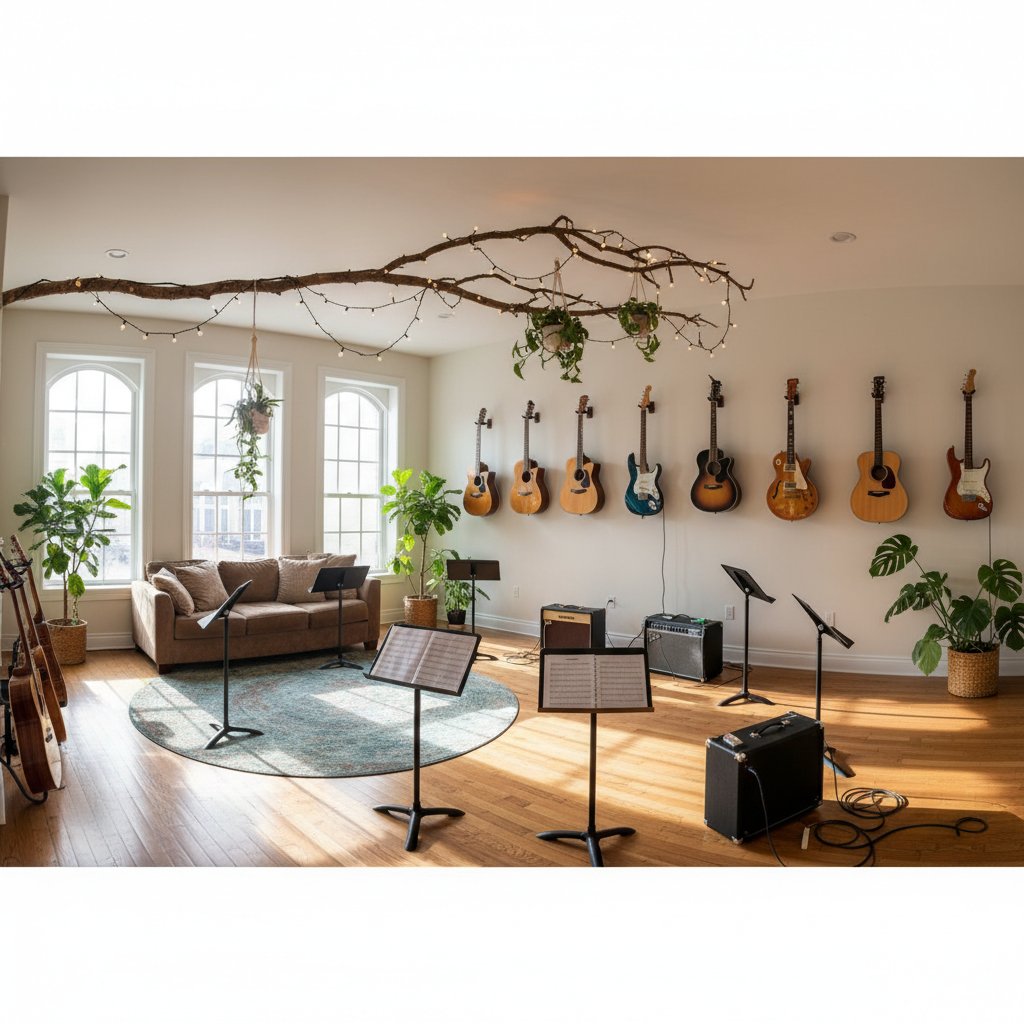
Wivulo was established in 2015 by three professional guitarists who shared a common goal: to create a learning environment where students could develop genuine skills rather than just memorize songs. We started with a single studio in Wandsworth and five students. Today, we operate from our location on Elmfield Road, teaching over 120 students annually.
Our founders brought together 45 years of combined teaching experience from various London music schools and conservatories. This background allowed us to design a curriculum that addresses common learning obstacles while maintaining realistic progression timelines. We teach acoustic, electric, and classical guitar across multiple genres including rock, blues, jazz, and folk.
The school has grown through student referrals and consistent results. We maintain small class sizes with a maximum of 4 students per group session, and offer individual lessons for those who prefer one-on-one instruction. Our teaching staff includes 6 instructors, each specializing in different styles and techniques.
We provide structured guitar instruction that builds technical proficiency and musical understanding. Our lessons focus on proper technique, music theory fundamentals, and repertoire development. Students learn to read standard notation and tablature, understand chord construction, and develop their ear training abilities. We aim to equip each student with skills they can apply independently, whether playing for personal enjoyment or pursuing further musical education.
We see guitar education as a long-term process that requires patience and consistent practice. Our goal is to establish ourselves as a reliable resource for guitar instruction in South London, known for thorough teaching methods and realistic expectations. We want students to leave our courses with functional skills, understanding of musical concepts, and the ability to continue learning independently through proper practice habits.
Our curriculum follows a logical progression from basic open chords through barre chords, scales, and advanced techniques. Each lesson builds on previous material with clear objectives and measurable outcomes.
We emphasize correct hand position, picking technique, and fretting accuracy from the first lesson. These fundamentals prevent bad habits that become difficult to correct later and enable faster progression.
Every technique we teach is connected to actual music. Students learn why certain fingerings or rhythms matter by applying them to songs and exercises that demonstrate their practical use in different genres.
We provide direct feedback on student progress, identifying specific areas that need work. Our instructors set realistic timelines for skill development based on practice frequency and current ability level.
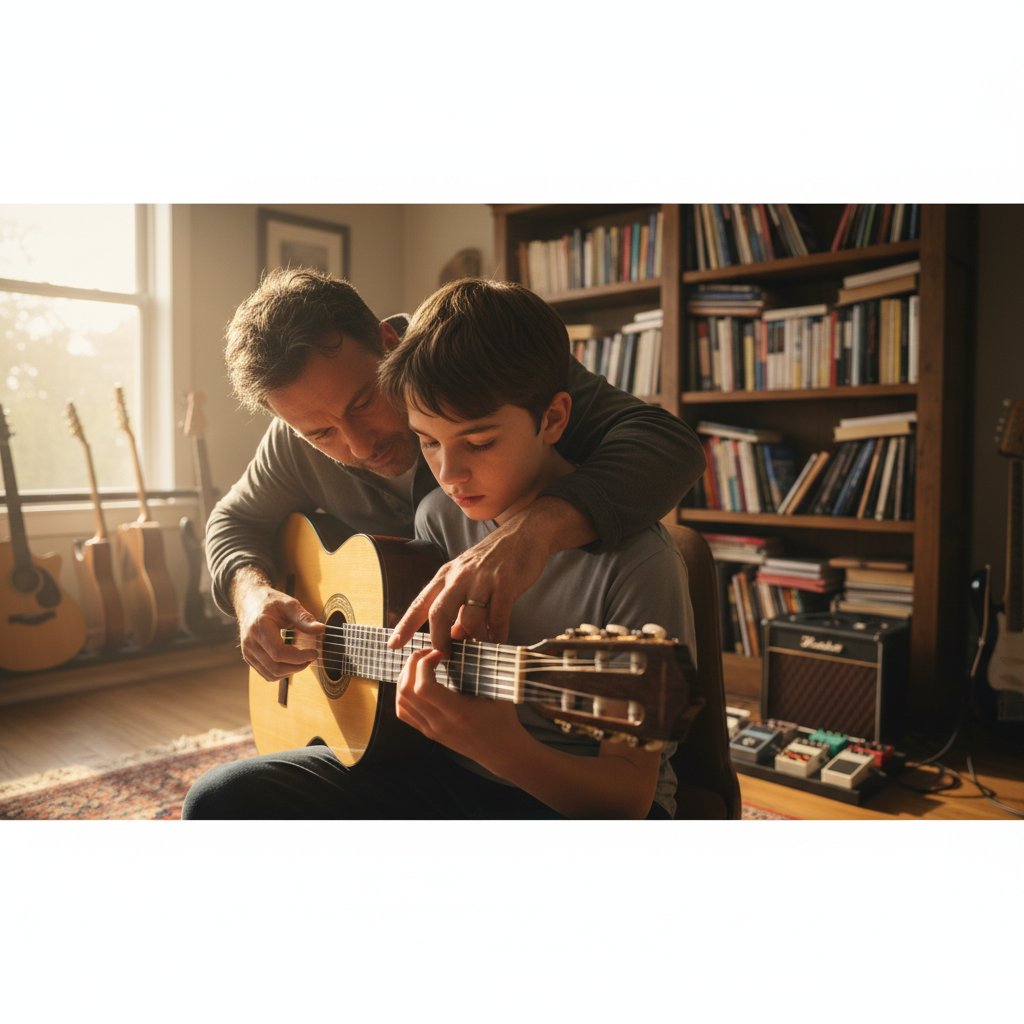
Our teaching staff holds qualifications from institutions including the Royal Academy of Music, Trinity College London, and Guildhall School of Music. Instructors have performed professionally in various settings from studio sessions to live venues across the UK and Europe. This practical experience informs our teaching approach, as we understand what skills actually matter for different musical contexts.
We have developed our own supplementary materials including technique exercises, theory worksheets, and practice guides. These resources complement standard method books and are tailored to address common challenges we observe in student development. Our library includes over 200 songs arranged at different difficulty levels, allowing students to work on repertoire that matches their current abilities while gradually increasing complexity.